
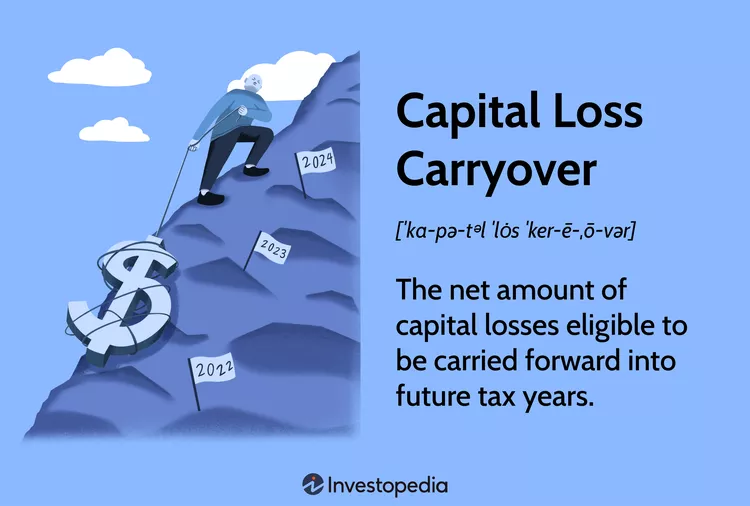
For decades, the Kenyan fiscal landscape offered a reliable safety net for capital-intensive enterprises: the ability to carry forward tax losses indefinitely. This provision allowed businesses — from geothermal plants to tech startups —to offset early-year losses against future profits without the pressure of an expiring clock.
However, the Finance Bill 2026 proposes a seismic shift in this policy. If passed, the bill will introduce a rigid five-year cap on tax loss carry-forwards, fundamentally altering the financial feasibility of long-term investments in Kenya.
Read the full breakdown of Finance Bill 2026 here
At Pedo & Associates, we have observed that this change is not merely a technical adjustment; it is a strategic pivot by the Kenya Revenue Authority (KRA) to accelerate revenue collection. For many, this means a “tax asset” on the balance sheet could overnight become an expired liability. This comprehensive guide explores what the tax loss carry-forward Kenya changes mean for your corporate tax planning and how you can safeguard your business before the July 1, 2026, effective date.
What Is a Tax Loss Carry-Forward and Why Does It Matter to Kenyan Businesses?
In simple terms, a tax loss carry-forward occurs when a business’s deductible expenses exceed its taxable income in a given financial year. Under the current Income Tax Act (Cap 470), these losses are treated as a shield. They can be moved forward to subsequent years to reduce the taxable profit, thereby lowering the corporate tax bill.
Historically, Kenya has been relatively generous. Until recently, losses could be carried forward indefinitely. This was a critical incentive for attracting Foreign Direct Investment (FDI), particularly in sectors where the “gestation period”—the time between initial investment and first profit—is long.
For a Nairobi corporate tax advisor, tax losses are viewed as a strategic asset. When a company invests KES 500 million in a new manufacturing plant, it expects to run at a loss for the first few years due to high depreciation and setup costs. The ability to offset those losses in Year 7 or Year 10 was what made the investment viable. The Finance Bill 2026 tax losses proposal threatens to break this model.
The Finance Bill 2026 Proposal: From Indefinite to Five Years
The Kenya tax reform 2026 trajectory suggests a tightening of the net. The Finance Bill 2026 proposes that a tax loss shall only be carried forward for a maximum of five years from the year in which it was incurred.
Key Provisions:
- The Five-Year Clock: If a loss is incurred in Year 1, it must be fully utilized by the end of Year 6. If the business is still not profitable enough to absorb that loss by Year 7, the remaining loss balance expires.
- Effective Date: If the bill passes, it is expected to take effect from July 1, 2026.
- Transition Rules: One of the most debated areas for ICPAK CPA professionals is how the law will treat “legacy losses” accumulated prior to 2026. Current interpretations suggest the five-year clock may start ticking for all existing losses the moment the bill is enacted.
Your Business Is Most at Risk If:
Not every business will feel the sting of this cap equally. As tax experts at Pedo & Associates, we have identified the “High-Risk Profile” for the 2026 reforms. Your business is significantly at risk if:
- You take 5+ years to become profitable: Typical for deep-tech startups, infrastructure projects, and pharmaceutical research.
- You rely on heavy upfront capital investment: If your business model involves massive initial CAPEX followed by gradual recovery.
- You accumulate losses across multiple project phases: Common in the energy sector where one phase might be profitable while the next two are in a loss position.
- You operate in regulated or infrastructure-heavy sectors: Where pricing is controlled and ROI is intentionally spread over decades.
Key Insight: The five-year cap effectively turns long-term investment losses into expired tax assets, increasing real tax payable for capital-intensive businesses. A loss is no longer a guaranteed reduction of future tax.
Which Sectors in Kenya Will Be Hit Hardest by the Five-Year Cap?
The Finance Bill 2026 impact will be felt most acutely in sectors that drive the “Big Four” agenda and the Vision 2030 goals.
1. Energy (Solar, Geothermal, and Wind)
Energy projects often involve billions in upfront costs. It can take 7 to 10 years to break even. Under the new rule, a geothermal plant that incurs massive losses in its first five years of drilling and construction may see those losses expire just as it begins to generate significant revenue.
2. Manufacturing and Industrial Plants
Manufacturing is the backbone of the Kenyan economy, yet it requires heavy machinery and long setup times. With the Kenya corporate tax 2026 changes, manufacturers may find themselves paying 30% corporate tax even while they are technically still “in the red” on a cumulative basis.
3. Startups and Tech Hubs
Nairobi is the “Silicon Savannah.” Most startups operate at a loss for years to capture market share (the “Amazon model”). A five-year cap forces these companies to pivot to profitability sooner than planned or face a heavy tax burden that could stifle their growth.
4. NGOs with Commercial Operations
Many NGOs in Kenya run social enterprises or commercial arms to fund their charitable work. If these commercial arms face the five-year cap, it could reduce the funding available for their primary missions.
A Real Numbers Example: How the Cap Affects Your Tax Bill
To understand the gravity of the tax loss carry-forward Kenya cap, let’s look at a hypothetical manufacturing firm, “Kenya Industrial Ltd.”
Scenario: The firm invests heavily in Year 1 and incurs a KES 50 million loss.
| Year | Profit/Loss (KES) | Old Rule (Indefinite) | New Rule (5-Year Cap) | | :— | :— | :— | :— | | Year 1 | (50,000,000) | Loss Carried Forward | Loss Carried Forward | | Year 2 | (10,000,000) | Total Loss: 60M | Total Loss: 60M | | Year 3 | (5,000,000) | Total Loss: 65M | Total Loss: 65M | | Year 4 | 5,000,000 | Taxable Income: 0 (Loss remains: 60M) | Taxable Income: 0 (Loss remains: 60M) | | Year 5 | 10,000,000 | Taxable Income: 0 (Loss remains: 50M) | Taxable Income: 0 (Loss remains: 50M) | | Year 6 | 10,000,000 | Taxable Income: 0 (Loss remains: 40M) | Taxable Income: 0 (Loss remains: 40M) | | Year 7 | 15,000,000 | Taxable Income: 0 (Loss remains: 25M) | Taxable Income: 15,000,000 (Year 1 Loss Expired!) |
The Result: Under the old rule, the company pays KES 0 in tax in Year 7. Under the Finance Bill 2026, the company pays KES 4.5 million (30% of 15M) because their Year 1 losses of KES 50 million have expired. This happens despite the company still being in an overall cumulative loss position of KES 25 million.
What the Private Sector Is Saying: KEPSA’s Calls for a Ten-Year Extension
The private sector has not remained silent. The Kenya Private Sector Alliance (KEPSA) and the Kenya Bankers Association (KBA) have raised significant concerns. Their primary argument is that a five-year window is insufficient for the Kenyan economic context, where infrastructure and logistics challenges often delay the path to profitability.
KEPSA is currently lobbying for an extension of the cap to at least ten years. They argue that a ten-year window strikes a better balance between the government’s need for immediate revenue and the private sector’s need for investment stability. As a Nairobi corporate tax advisor, Pedo & Associates closely monitors these negotiations to provide our clients with the most up-to-date tax advisory Nairobi corporates require.
The Double Squeeze: How the Earlier Filing Deadline Compounds the Loss Cap
The loss carry-forward cap does not exist in a vacuum. It intersects with another major proposal: moving the tax filing deadline from June 30 to April 30.
This creates a “Double Squeeze” for finance teams:
- Complexity: You must now accurately track the “age” of every shilling of loss.
- Time Pressure: You have two fewer months to finalize audits and perform tax planning.
For KRA tax planning SMEs, this means that the window for identifying and utilizing losses is shrinking from both ends. You have less time to file and less time to profit. This makes early engagement with Pedo & Associates for year-end tax health checks more critical than ever.
Should You Use the Tax Amnesty Window to Resolve Prior Loss Disputes?
There is a strategic silver lining: the tax amnesty Kenya 2026 window. Many businesses currently have ongoing disputes with the KRA regarding the validity of prior-year losses. The KRA often audits these losses, questioning expenses and depreciation claims.
If you have a disputed loss from five years ago, and the new law passes, that loss might expire before you even win the dispute.
Our Recommendation: Use the tax amnesty window to settle outstanding assessments and “lock in” your validated losses. By clearing the air now, you ensure that the losses currently sitting on your books are undisputed and ready to be utilized as quickly as possible before the five-year clock runs out.
Policy Interpretation: Why is the KRA Doing This?
At Pedo & Associates, our policy interpretation is that this change signals a shift toward accelerating tax collection and limiting long-term tax deferrals. Historically, large-scale projects have used indefinite carry-forwards to remain “tax-free” for nearly two decades.
The government is under pressure to increase domestic resource mobilization to service debt and fund the budget. Limiting loss carry-forwards is a “stealth” way to increase the effective tax rate on capital-intensive businesses without raising the headline corporate tax rate of 30%.
Strategic Tax Planning to Manage the Five-Year Carry-Forward Limit
How should your business respond? Corporate tax planning Kenya is no longer a once-a-year activity; it requires a multi-year model.
1. Accelerated Income Recognition
In some cases, it may be beneficial to accelerate income or defer deductible expenses to ensure you utilize losses before they expire. This is a complete reversal of traditional tax planning (which usually seeks to defer income).
2. Corporate Restructuring
If one entity in your group has expiring losses and another is profitable, consider a merger or a transfer of business. However, be wary of “Anti-Avoidance” provisions. Pedo & Associates can help navigate the legalities of restructuring to preserve tax assets.
3. Precise Loss Tracking (The “Vintage” Method)
Businesses must now track losses by “vintage”—the year they were born. Your accounting software and tax schedules must be updated to trigger alerts when a “vintage” of loss is entering its fourth year.
4. Re-evaluating Deferred Tax Assets (DTAs)
For companies following IFRS, the five-year cap may lead to a write-down of Deferred Tax Assets on the balance sheet. If it is no longer “probable” that the loss will be used within five years, the asset must be impaired, which could hit your reported earnings and affect bank covenants.
5. Engage a Tax Advisory Nairobi Specialist
The complexity of modeling these changes requires professional expertise. A Nairobi corporate tax advisor can perform a “Loss Impact Simulation” to show exactly how much your tax liability will increase under the new rules.
Conclusion: Preparing for July 2026
The tax loss carry-forward Kenya landscape is changing. The shift from indefinite to a five-year cap is one of the most significant changes to the Income Tax Act in recent history. It transforms the way we think about investment, profitability, and corporate structure.
For businesses in manufacturing, energy, and the startup ecosystem, the time to act is now. You cannot afford to wait until 2026 to see if your losses will survive. You need a proactive strategy to utilize your tax assets before they vanish.
How Pedo & Associates Can Help
At Pedo & Associates, we specialize in high-level tax advisory services and tax planning services for Kenyan and international corporates. Our team of tax experts can help you:
- Conduct a Tax Loss Audit to validate your current loss position.
- Develop a Five-Year Tax Impact Model based on the Finance Bill 2026 proposals.
- Navigate the Tax Amnesty window to resolve prior disputes.
- Structure your business to maximize the utility of your tax losses.
Don’t let your tax assets expire. Contact Pedo & Associates today for a comprehensive tax health check and strategic planning session.
[Contact Us for a Consultation] | [Learn More About Our Corporate Tax Services]
Leave a Reply